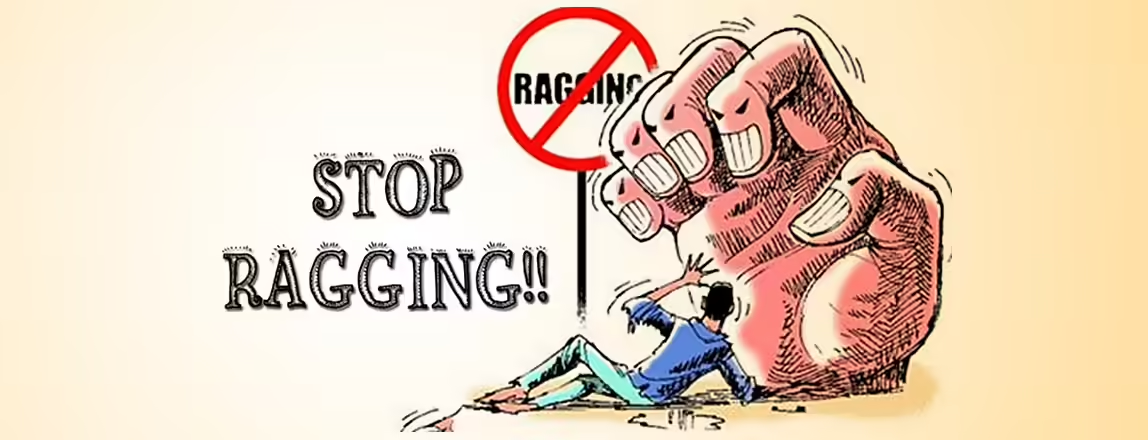
A first-year student joins college full of excitement, and within the first week, seniors start “welcoming” them in ways that feel more like humiliation than tradition. Sound familiar? Unfortunately, this is still common across many campuses, despite strict rules being in place for years now.
Understanding the anti ragging law India enforces isn’t just about knowing a definition — it’s about knowing exactly what to do the moment things cross a line. Let’s go through this properly.
What Counts as Ragging, Legally?
Direct answer: Ragging is legally defined as any act, physical or verbal, by a senior student that causes annoyance, hardship, psychological harm, or embarrassment to a junior, including forced obscene acts, financial extortion, or any conduct violating a student’s dignity, as per UGC Regulations, 2009.
It’s broader than most people assume. Ragging doesn’t need to be violent to be illegal — persistent verbal humiliation, forced tasks, or even excessive “friendly” teasing that a student clearly doesn’t consent to can qualify.
The Legal Framework Behind Anti-Ragging Rules
Ragging is governed primarily by:
- UGC Regulations on Curbing the Menace of Ragging in Higher Educational Institutions, 2009
- State-specific anti-ragging acts (many states have their own laws, like the Tamil Nadu Prohibition of Ragging Act)
- Supreme Court directions in the landmark University of Kerala v. Council of Principals case, which led to the formation of the Raghavan Committee recommendations
This case is genuinely important — it’s the reason most colleges today have anti-ragging committees and mandatory affidavits from students and parents.
Mandatory Anti-Ragging Measures in Colleges
Every college and university in India is required to have:
- An Anti-Ragging Committee (headed by the Head of Institution)
- An Anti-Ragging Squad for surprise checks in hostels, canteens, and common areas
- A mandatory anti-ragging affidavit signed by both student and parent at admission
- Display of anti-ragging helpline numbers and posters across campus
- A functional complaint mechanism, including anonymous reporting options
Direct answer: Colleges are legally required under UGC guidelines to have an Anti-Ragging Committee and Squad, mandatory affidavits from students, and prominently displayed helpline information to prevent and address ragging incidents.
National Anti-Ragging Helpline
Students can call 1800-180-5522 (toll-free, 24×7) or email helpline@antiragging.in — this connects directly to the UGC’s monitoring system, separate from the college’s internal mechanism. I’d actually recommend using this alongside a college complaint, not instead of it, since it creates an independent record.
Punishments for Ragging
Depending on severity, punishments can include:
- Suspension or expulsion from the institution
- Withholding of scholarships or results
- Debarring from appearing in examinations
- Rustication for a specified period
- Criminal prosecution under IPC/BNS sections for assault, criminal intimidation, or outraging modesty, where applicable
- Cancellation of admission in serious cases
For genuinely severe ragging incidents resulting in physical or psychological harm, this isn’t just a college disciplinary matter — it becomes a criminal case too, and FIRs are often mandatory once reported.
How Should a Student File a Ragging Complaint?
- Report immediately to the college’s Anti-Ragging Committee or Squad
- Call the national helpline (1800-180-5522) for an independent complaint record
- If the college is unresponsive, escalate to the UGC directly
- In serious cases involving physical harm or extortion, file an FIR with local police simultaneously
Picture a hostel student in Jaipur being forced to do a senior’s laundry daily under threat of social exclusion. That’s textbook ragging, even without physical violence, and it’s completely valid to report it through the anti-ragging committee.
[link to related guide on legal rights under RTE Act here]
Can Ragging Complaints Be Filed Anonymously?
Yes, and this matters a lot for students afraid of retaliation. Most institutions provide anonymous complaint boxes or online portals where identity isn’t disclosed to the accused, at least during initial investigation stages.
What If the College Doesn’t Take Action?
This does happen, unfortunately, especially in institutions worried about reputational damage. If a college fails to act:
- Complain directly to the UGC (for higher education institutions)
- Approach the State Anti-Ragging Committee
- File a writ petition in the High Court citing institutional negligence
- Involve local police for criminal aspects independently of the college process
FAQs
What is the national anti-ragging helpline number? The toll-free helpline is 1800-180-5522, available 24×7, connected directly to UGC’s monitoring cell.
Is ragging a criminal offence in India? Yes, severe ragging cases can attract criminal charges under IPC/BNS provisions alongside institutional disciplinary action.
Can a student be expelled for ragging? Yes, expulsion, suspension, and debarment from exams are all valid punishments under UGC anti-ragging regulations.
Do parents need to sign an anti-ragging affidavit? Yes, most colleges require both student and parent to sign an anti-ragging affidavit at the time of admission.
Can I file a ragging complaint anonymously? Yes, most institutions allow anonymous complaints, especially through online portals or complaint boxes, to protect the complainant’s identity.
What should I do if my college ignores my ragging complaint? Escalate directly to the UGC or State Anti-Ragging Committee, and consider filing a police complaint for serious incidents.
Conclusion
No student should have to “tolerate” ragging as some unspoken tradition — the anti ragging law India has in place is fairly strong on paper, and colleges are legally bound to act on complaints. If you or someone you know is going through this, don’t wait around hoping it stops on its own; call the national helpline today and get it documented properly, because that record matters if things escalate.