
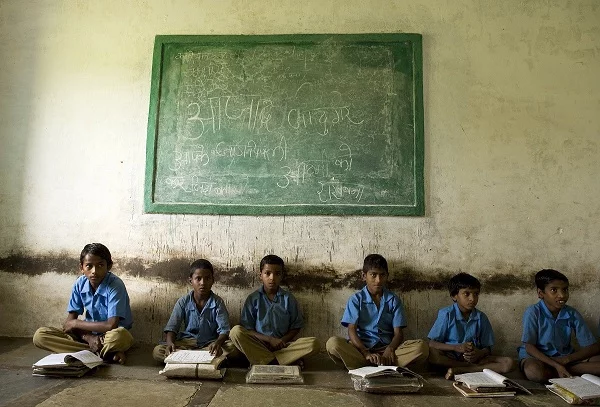
A father in a small town wants to admit his daughter into a good private school, but the fees feel completely out of reach. Does he have any legal option here, or is this just wishful thinking?
Actually, he might — if his income and the school meet certain conditions. That’s exactly what the RTE Act 2009 explained properly can help families understand, especially the parts nobody bothers explaining in simple language.
What Is the RTE Act, In Simple Terms?
Direct answer: The Right of Children to Free and Compulsory Education Act, 2009 (RTE Act) guarantees free and compulsory elementary education to every child aged 6 to 14 years in India, making it a fundamental right under Article 21A of the Constitution.
It came into force on April 1, 2010, following the 86th Constitutional Amendment which inserted Article 21A. Before this, education was a Directive Principle — meaning aspirational, not enforceable. RTE changed that completely.
Who Does the RTE Act Cover?
Every child between 6-14 years, regardless of gender, caste, religion, or economic background. This includes:
- Children with disabilities (with specific provisions for inclusive education)
- Children from disadvantaged groups (SC/ST, minorities)
- Children from economically weaker sections (EWS)
- Migrant children, working children, and those without any school access previously
The 25% Reservation Rule — The Most Talked-About Part
This is probably the most well-known provision, and honestly the most misunderstood too.
Direct answer: Under Section 12(1)(c) of the RTE Act, every private unaided school must reserve 25% of seats in the entry-level class for children from economically weaker sections and disadvantaged groups, admitted free of cost, with the government reimbursing the school.
I’ve noticed a lot of parents assume this applies to any private school for any class — it doesn’t. It’s specifically for entry-level admission (usually pre-primary or Class 1, depending on the school), and eligibility depends on state-specific income criteria.
No-Detention Policy — What Changed
Originally, RTE prohibited holding back or expelling children up to Class 8, regardless of exam performance. This was meant to reduce dropout rates, but it drew a lot of criticism from educators who felt it hurt learning outcomes.
In 2019, this was amended — states now have the option to hold exams in Class 5 and Class 8, and can detain students who fail, provided they get additional remedial teaching and a second chance first.
What Schools Are Required to Provide
Under RTE, recognized schools must ensure:
- Pupil-Teacher Ratio (PTR) of 30:1 for primary classes
- Adequate infrastructure — classrooms, drinking water, toilets (separate for girls)
- No capitation fees or donations for admission
- No screening tests or interviews for admission of the child or parents
- No physical or mental harassment of students
Picture a school demanding a “building fund” donation before admitting a child — that’s a direct RTE violation, and honestly, still happens more often than it should, especially in smaller towns.
How Can Parents Apply Under the 25% Quota?
- Check your state’s RTE admission portal (usually opens a few months before the academic year)
- Verify eligibility — income certificate, address proof, caste certificate (if applicable), birth certificate
- Select preferred schools within the notified distance (usually 1-3 km depending on state)
- Submit application online or offline as per state process
- Selection is often through lottery/draw of lots if applications exceed available seats
The process genuinely varies quite a bit state to state, so checking your specific state’s education department website is important — Rajasthan’s process, for instance, differs from Delhi’s or Maharashtra’s in documentation and timelines.
[link to related guide on legal rights of students here]
What If a School Denies RTE Admission Unfairly?
Parents can:
- Complain to the District Education Officer
- Escalate to the State Commission for Protection of Child Rights (SCPCR)
- File a complaint with the National Commission for Protection of Child Rights (NCPCR) if state redressal fails
Common Misconceptions About RTE
- It does NOT cover pre-school (below age 6) uniformly across all states
- It does NOT apply to unrecognized schools not registered under RTE norms
- It does NOT guarantee admission to any specific school of choice — it’s subject to distance criteria and seat availability
- It does NOT mean free education till Class 12 — the mandate is specifically for elementary education (up to age 14)
FAQs
What age group does the RTE Act cover? Children between 6 and 14 years of age, corresponding to elementary education (Classes 1 to 8).
What is the 25% RTE quota in private schools? It requires private unaided schools to reserve 25% of entry-level seats for children from economically weaker and disadvantaged sections, free of cost.
Is RTE applicable to all private schools in India? It applies to private unaided recognized schools; unrecognized or unregistered institutions typically fall outside RTE’s direct mandate.
Can a child be expelled for poor performance under RTE? Generally not up to Class 8, though the 2019 amendment allows states to conduct exams in Class 5 and 8 with provisions for remedial support before any detention.
How do I apply for RTE admission for my child? Through your state’s official RTE admission portal during the notified window, submitting required income, address, and identity documents.
What can I do if a school refuses RTE admission? You can complain to the District Education Officer or escalate to the State/National Commission for Protection of Child Rights.
Conclusion
The RTE Act 2009 explained simply comes down to one core idea — every child deserves access to quality elementary education, regardless of family income. The law exists, the provisions are solid on paper, but actual implementation still depends heavily on parents knowing their rights and pushing for them. If your child is eligible for the 25% quota, don’t let confusing paperwork stop you — check your state’s RTE portal today, the application windows don’t stay open long.